
The AWE + Creativity Connection
Light up your brain
Have we lost our sense of wonder? And why does this matter? A deep dive.
Have you ever tried to shout or scream underwater? All that can be heard is a pathetic little squawk, depending on how deep you are.
I know this because I came eye to eye with a humpback whale and her calf in open water, swam amongst a shiver of sharks1 and was surprised by an enormous manta ray off the Australian coast.
Moments that seemed as if time stood still, when I didn’t know where to put myself and wanted to jump out of my goosebumpy skin.
Dare I say: moments that felt life-changing, as in everything else seemed insignificant, including myself, and made me feel quietly happy for a long time (or maybe not so quiet tbh).
This is what awe does.
Awe is that profound feeling of wonder we feel, when we experience something that sits outside our usual frame of reference.
Oxford Dictionary calls it “a feeling of reverential respect mixed with fear or wonder”.
According to science, “awe is a complex emotion that can be difficult to define. Feelings of awe can be positive or negative — unlike most other emotions — and can arise from a wide range of stimuli.”
Awe has significant effects on our brain and overall well-being. When we experience awe, several areas of our brain become highly active and help process the significance of what we're witnessing, creating a connection between our physical sensations and emotional experiences.
Awe also triggers the release of dopamine in the brain, which contributes to feelings of joy and satisfaction, while the release of endorphins and other neurochemicals during these moments can boost our immune system, lower blood pressure and reduce inflammation.
What’s not to love?


Surprisingly, it’s been only a couple of decades that science has taken a closer look at the topic of awe.
“Science got into the awe game really late,” says Dacher Keltner, a psychology professor at the University of California at Berkeley, whose name keeps popping up in my feed. “For an emotion with so much riding on it, what seems surprising is that it took the academic world so long to take awe seriously.”2
It was 2003, to be precise, when Keltner and his colleague published one of the first papers on the topic of awe and what it is.
“We said that awe is really an emotion you feel when you encounter something vast and mysterious that transcends your understanding of the world,” he says. The vastness part, he explains, doesn’t have to be literally vast, like a view from a mountaintop. It can be conceptually vast, like the anatomy of a bee or string theory or a late-night stoner realization that every mammal on earth must have a belly button (lol).
Naturally, I was most interested on the effect awe has on our creativity, this being one of my key topics.
How feeling awe makes us more creative
I learned that when we experience a moment of awe, areas of our brains associated with emotional processing and self-referential thinking show increased activity.
We enter what is called a "small self" state - we feel smaller in the presence of what we are currently experiencing, which in turn helps break down preconceptions we may have and that limit us.
In those moments, the parts of our brains that are associated with our ego, such as self-criticism, anxiety, and depression (all arch enemies of the creative), quiet down and we shift, so Keltner, “…to perceive that we are part of networks of more interdependent, collaborating individuals.”
And what is more detrimental to our creativity and paralysing than our own negative thoughts?
Moments of awe silence our inner critic (or at least lower the volume) and help us to be more open to new ideas and different approaches — often leading to the most productive creative outputs.
It’s a bit like having a clear out to make space for new thoughts. Do you ever feel stagnant in your own thinking, like you just keep stirring the same old soup?
“Experiencing awe could be one of the most powerful tools we have for enhancing our creative capabilities.”

Certain factors make us more prone to experiencing awe: extraversion and being open and comfortable with ambiguity. A general appreciation of beauty also helps. I guess I am a prime candidate.
But it is clear we all benefit from it, especially if we need creativity to make a living.
Apparently, even brief experiences of wonder can lead to enhanced creative thinking for hours afterwards.
So, how do we get more of it into our lives? I did some research and compared it with my own experiences.
Ways to add more awe into our lives
“Stuff your eyes with wonder. Live as if you'd drop dead in ten seconds. See the world. It's more fantastic than any dream made or paid for in factories…”
― Ray Bradbury, Fahrenheit 451
Ray Bradbury wrote this in 1953, when television was becoming popular and he was worried about it. Fast forward 70 years and most of us have more devices in arm’s reach than eyeballs to look at them.
Today, it seems harder than ever to find moments of wonder and I am grateful for having lived in places that delivered such moments to my doorstep on the daily.
Nature ranks in the top two or three for experiencing awe. But it’s not limited to that.
“We can find awe anywhere,” writes Keltner.
Having studied people’s understanding and experience of awe in 26 different countries, he found eight types that are common and easily available to us all.
“They include nature, music, moral beauty (noticing kindness), birth and death, and ‘collective effervescence’. This is that feeling of coming together with others (…) you may have experienced it in a sports stadium, at a music concert, on a dancefloor, in worship, in a choir, or even at parkrun.”
No matter what our circumstances may be, there are ways to seek out small doses of joy in our daily lives. Here are some ideas.
Microdosing awe for more creativity
Look up.
One easy way to expose ourselves to all the awe-related benefits is to either get up with the sunrise or make time to watch the sunset. It has been my (almost) daily ritual for years, no matter where I live. Friends and I message each other about stunning moon views. It’s easy to underestimate or feel silly for mentioning these little moments. Don’t.
I’ll never forget the ridiculous amount of stars, including a comet, on a light-pollution-free Sinai desert sky. Fireflies performing silent dances in the tropics.
Go for a walk.
The humble walk, a constant feature in most famous artists’ routines throughout history, can deliver many micro moments of beauty and wonder: a crazy cloud formation, a murmuration of starlings3, sitting under an ancient tree, wondering what has taken place under its canopy of leaves during its long existence.
Bonus: Grab a friend: It takes just a handful of people “to stir collective awe,” and can be initiated by something as simple as walking together.
Zoom in.
A personal favourite of mine when life is difficult or just boring is to zoom in. Life can be hectic and we run around seeing things at eye level, things that we always see. So we feel how we always feel.
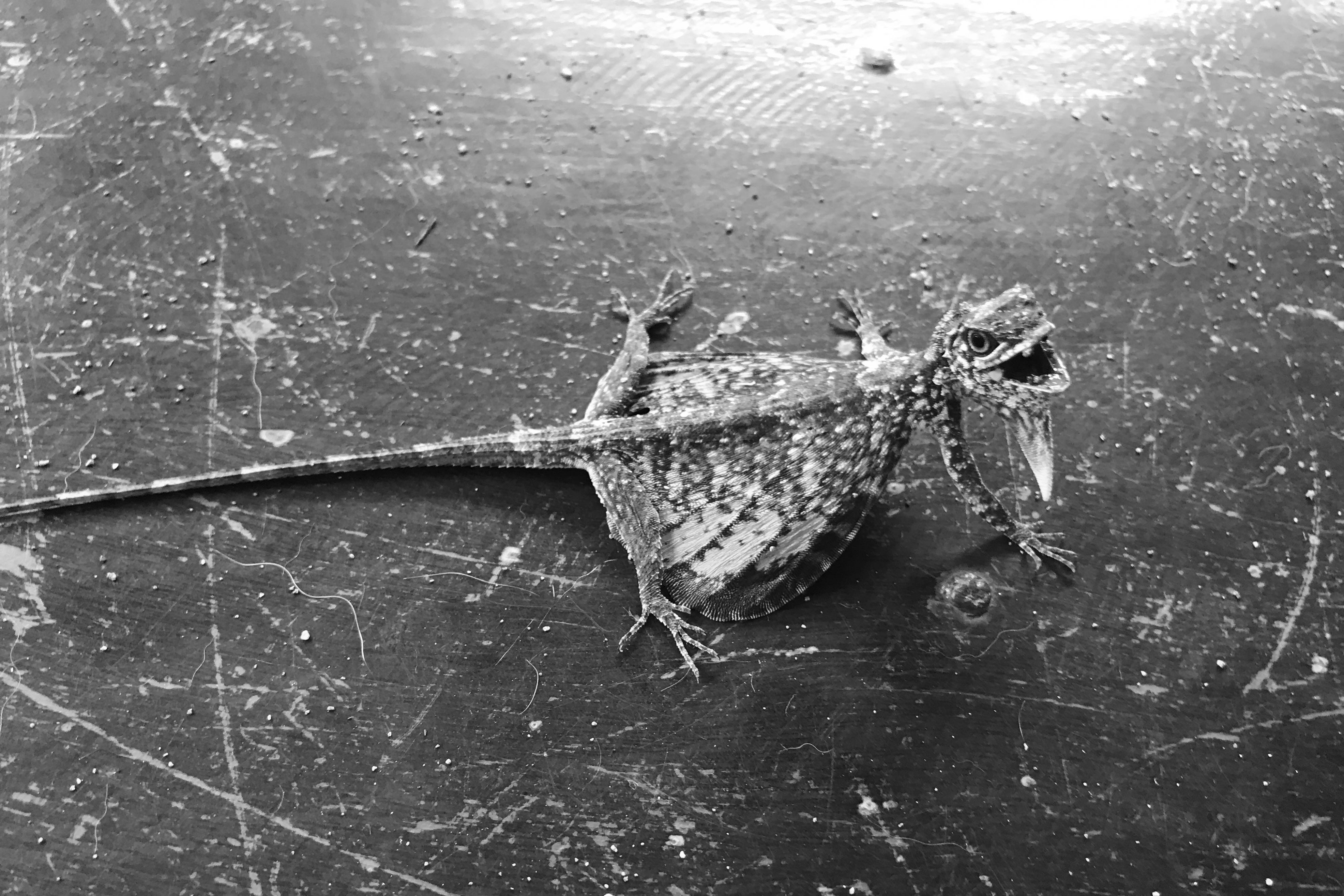
Lock eyes with tiny creatures. Find beautiful patterns in nature. Plant something.
Curate.
Every time we engage with great works of literature, art, or music, we do something for our wellbeing. Art is not just entertainment, it fulfils a need we all have but rarely allow time for. Take yourself on dates to see some art. Be amazed by what others create.
What if you’re sick or housebound for other reasons?
It is the good side of the internet that gives us micro moments of awe:
Natural beauty & the power of nature
Animals connecting with humans
Creative works of art and music
Acts of Kindness
Discoveries
Learning something new, reading biographies of inspirational figures, listening to music, or watching documentaries are ways to get some awe in.
For example: This is us, viewed from a mind-blowing 6 billion kilometres away:

Let that sink in for a minute or two.
(more on the specific type of awe that a view of our planet triggers here.)
Culling and curating our feeds helps to see more of the content that adds to our lives rather than take away.
While it’s not the full sensory experience, there is a reason why to this day, millions of people listen to Whitney Houston’s flawless vocals or admire Prince’s insane guitar skills on YouTube.
Anything that gives you joy and goosebumps. You’ll know it’s collective awe when it’s not to your usual taste but you have a profound reaction regardless.
Connect.
Lastly, my favourite and maybe a surprising one: deep conversations with others. Connecting with others, even those we may never see again (while travelling for example), can inspire micro moments of awe and stay with us for years to come.

Some of my micro moments of awe:
Summer sunsets outside my place in Siargao, Philippines
Hearing Claire de Lune for the first time (NOT trying to play it…)
The Valentino Couture Spring 2025 Show by Alessandro Michele
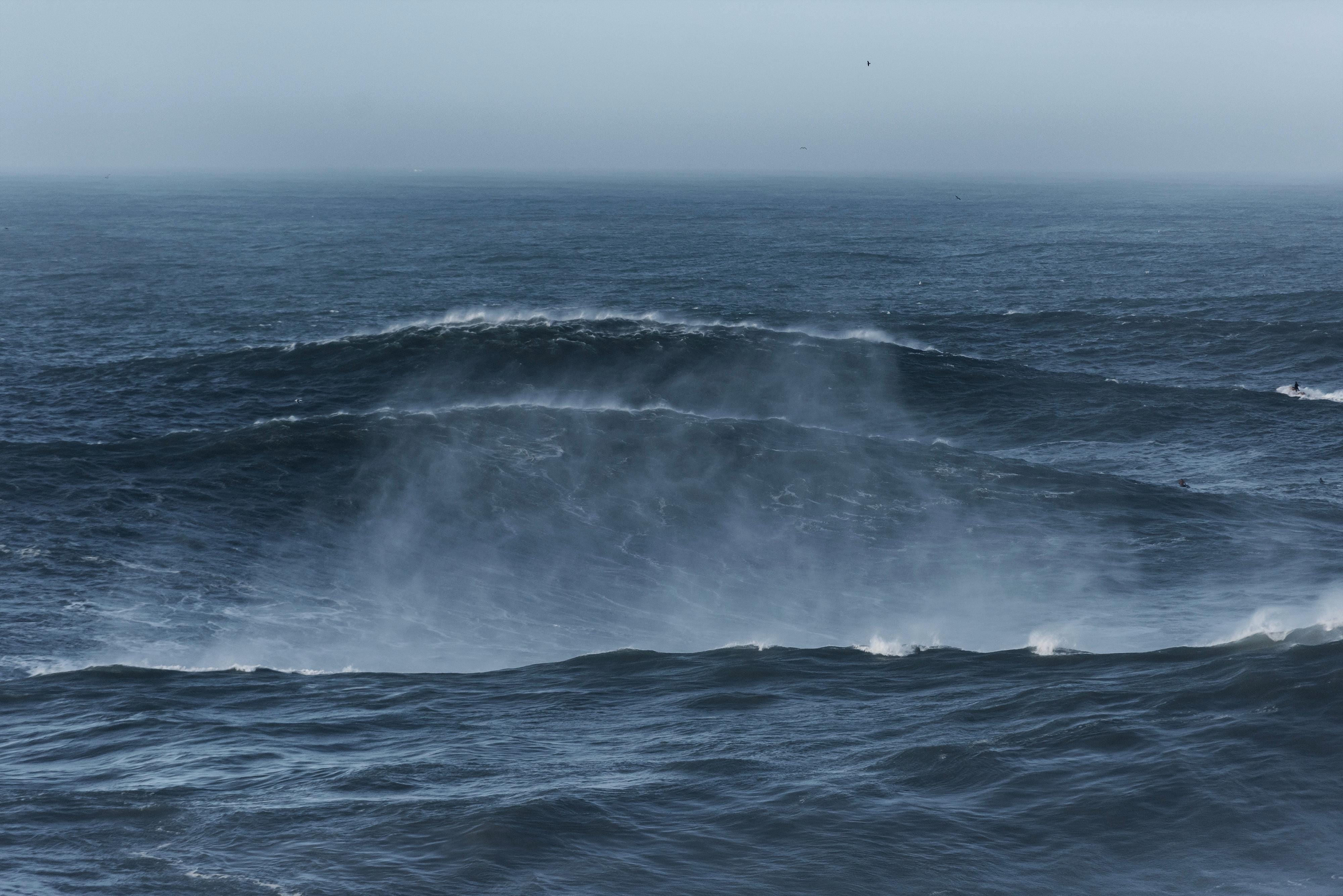
Watching a big wave steam roll into Nazaré from miles away
The storytelling and hand-made craft of the animated movie Flow
This impromptu musical meetup
In summary, experiencing awe makes us more creative and seems to be the healthiest, cheapest dopamine hit we can get.
The world may be a mess but wherever you are, you can find ways to light up your brain and improve wellbeing by seeking out small moments of beauty.
How are you going to “stuff your eyes with wonder” next?
Hadassa x
Footnotes:
Yes, I looked this up
SOURCES:
https://ggsc.berkeley.edu/images/uploads/GGSC-JTF_White_Paper-Awe_FINAL.pdf_
https://www.outsideonline.com/adventure-travel/essays/power-of-awe/
https://www.nuvancehealth.org/health-tips-and-news/the-neuroscience-and-health-benefits-of-awe-and-wonder
What an art of storytelling. I am sooo dazzled and can't wait for the sunrise, so I can search for awe on my walk. Thank for this inspiration